What it is
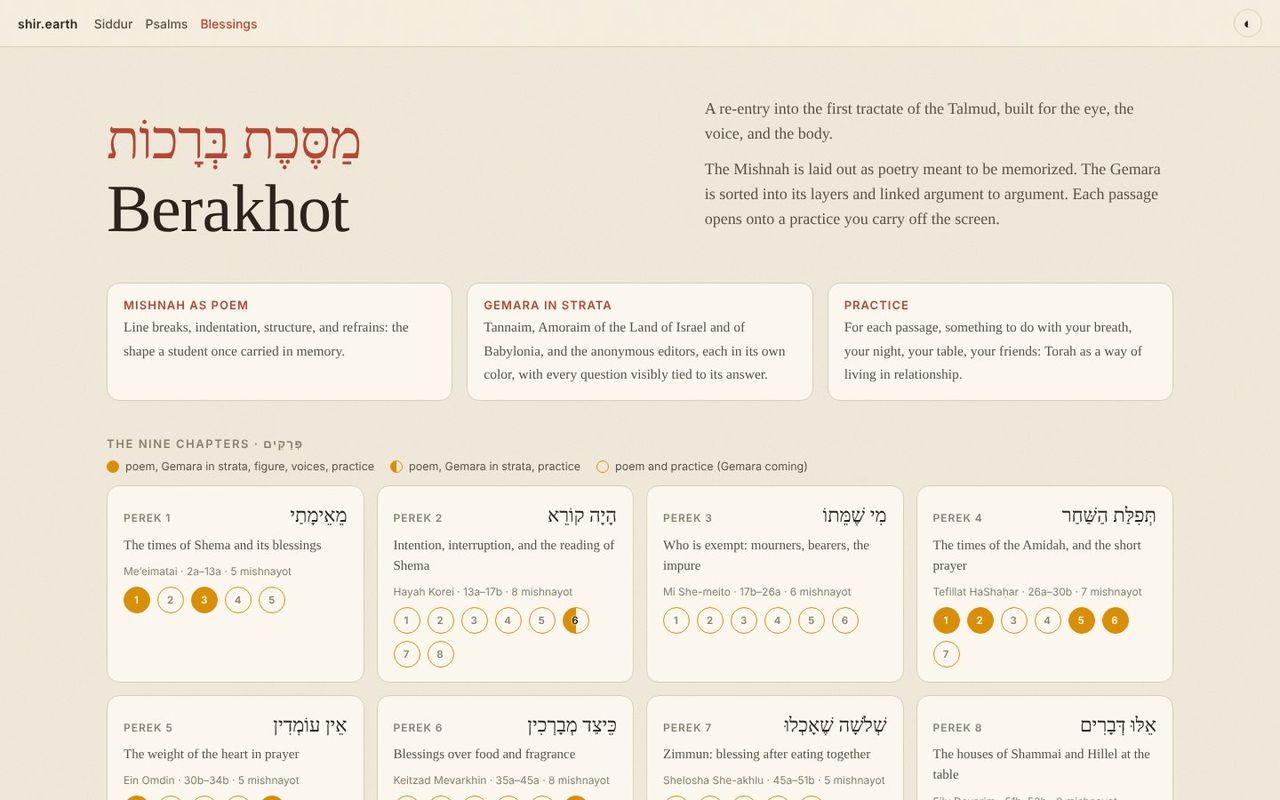
Berakhot is the first tractate of the Talmud, and its subject is prayer and blessing: when to say the Sh’ma, how to stand, what to say over bread, thunder, or a rainbow. I’m re-entering it slowly, and visually.
Three ways into each passage
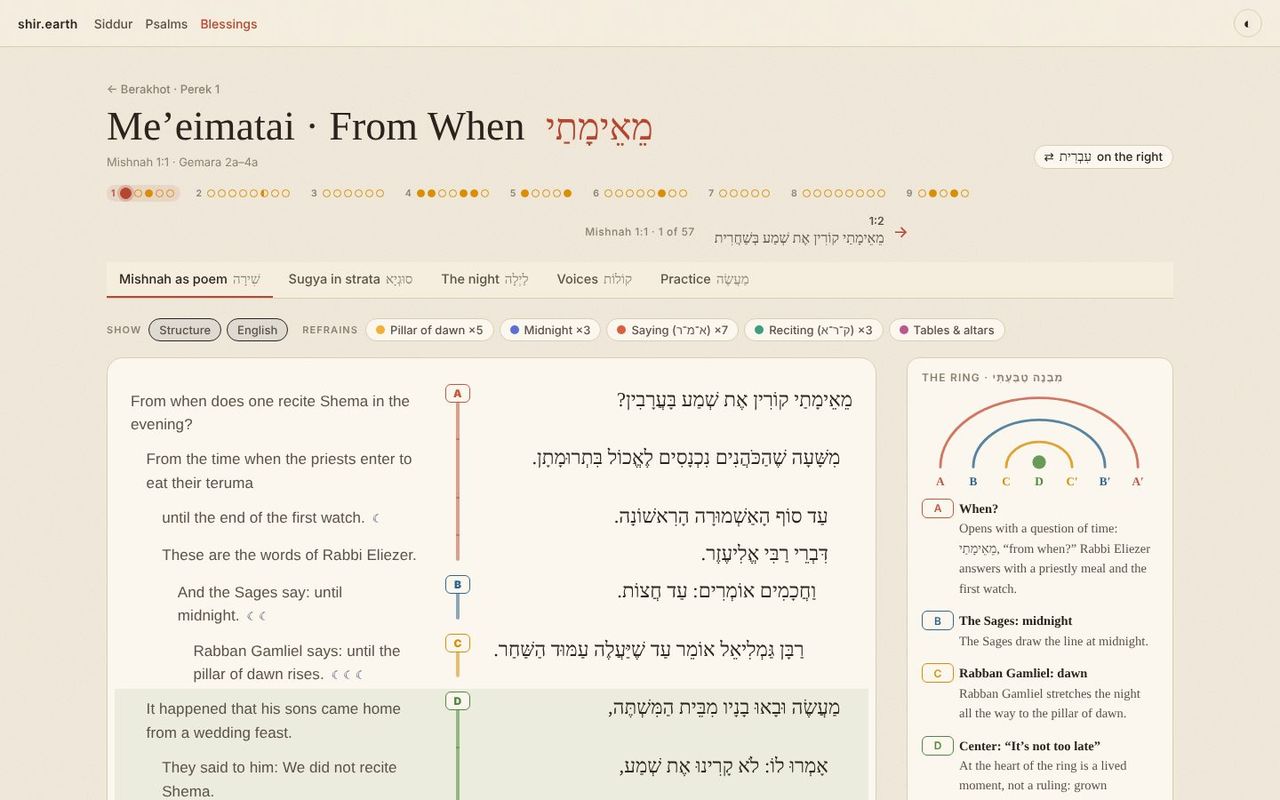
The Mishnah as poem
Each mishnah is set as a poem, in Hebrew and English side by side, with its refrains and turns made visible, so it can be learned by heart.
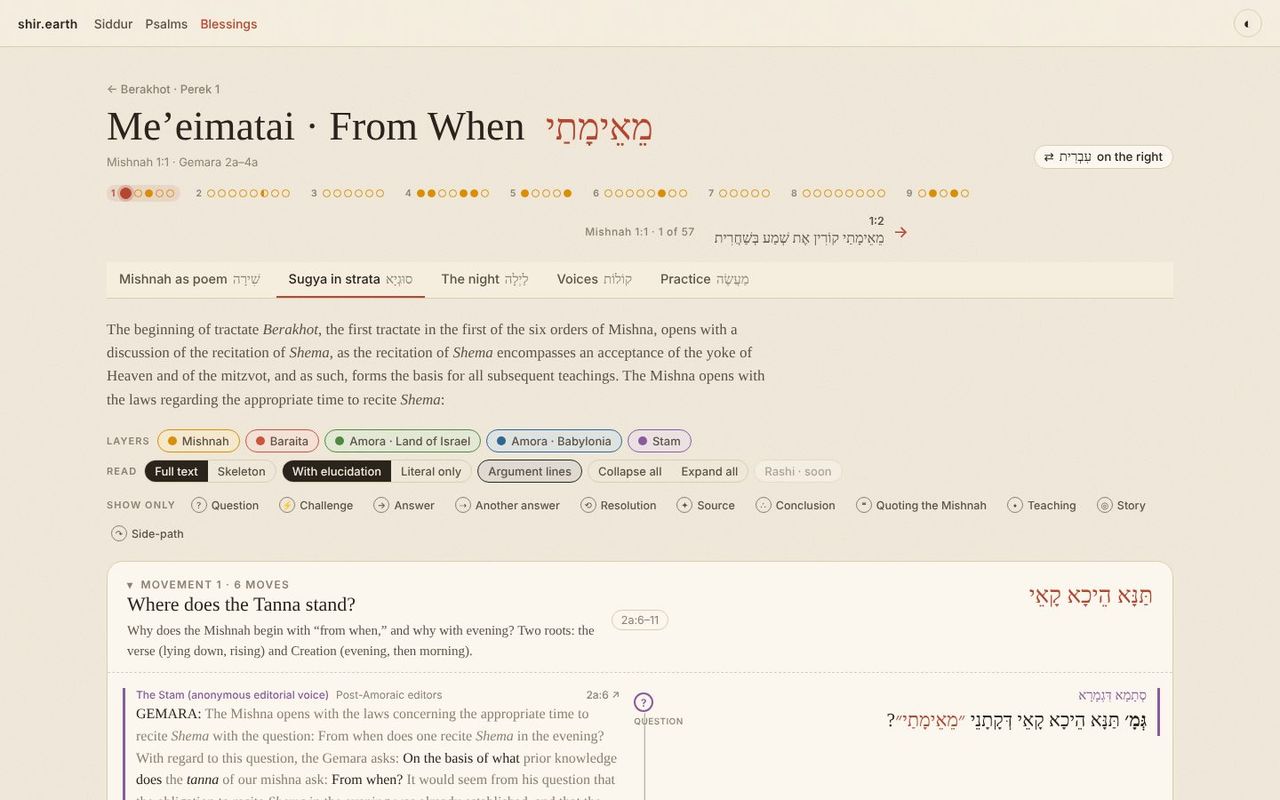
The Gemara in strata
The Talmud’s discussion is divided into layers and mapped move by move, so you can see who is speaking and how the argument travels.
Practices
Every passage leads off the page into embodied practice: a posture, a pause, a blessing to try.
Where it stands
Every one of the 57 mishnayot has a page with its poem and practices. Eleven have fuller studies, with the Gemara mapped, a figure, and the voices of the sages. The rest are being mapped one by one. A deck of practice cards, drawn from the studies, is in design.
A note on language
Translations stay literal, including gendered language for God and for people. The teaching voice around them (notes, summaries, and practices) is gender-expansive, and hard passages get a short critical note rather than silence.